1. What does ‘attitude’ mean to you?
For me, attitude is a form of sensitivity; it is a particular way of relating to what we see, think or feel.
In my case, it means not settling for pre-established ideas or ways of doing things; not simply waiting for life to pass you by, but pursuing your dreams, building your own reality without fear of making mistakes, taking risks and believing in yourself, even if that means going against the grain.
When I decided to make a life change and devote myself to pottery in 2013, it was a very radical move because it wasn’t something that was in vogue at the time. I simply followed my dream and tried to make it a reality.
2. How is this attitude reflected in what you do on a day-to-day basis at Atuell?
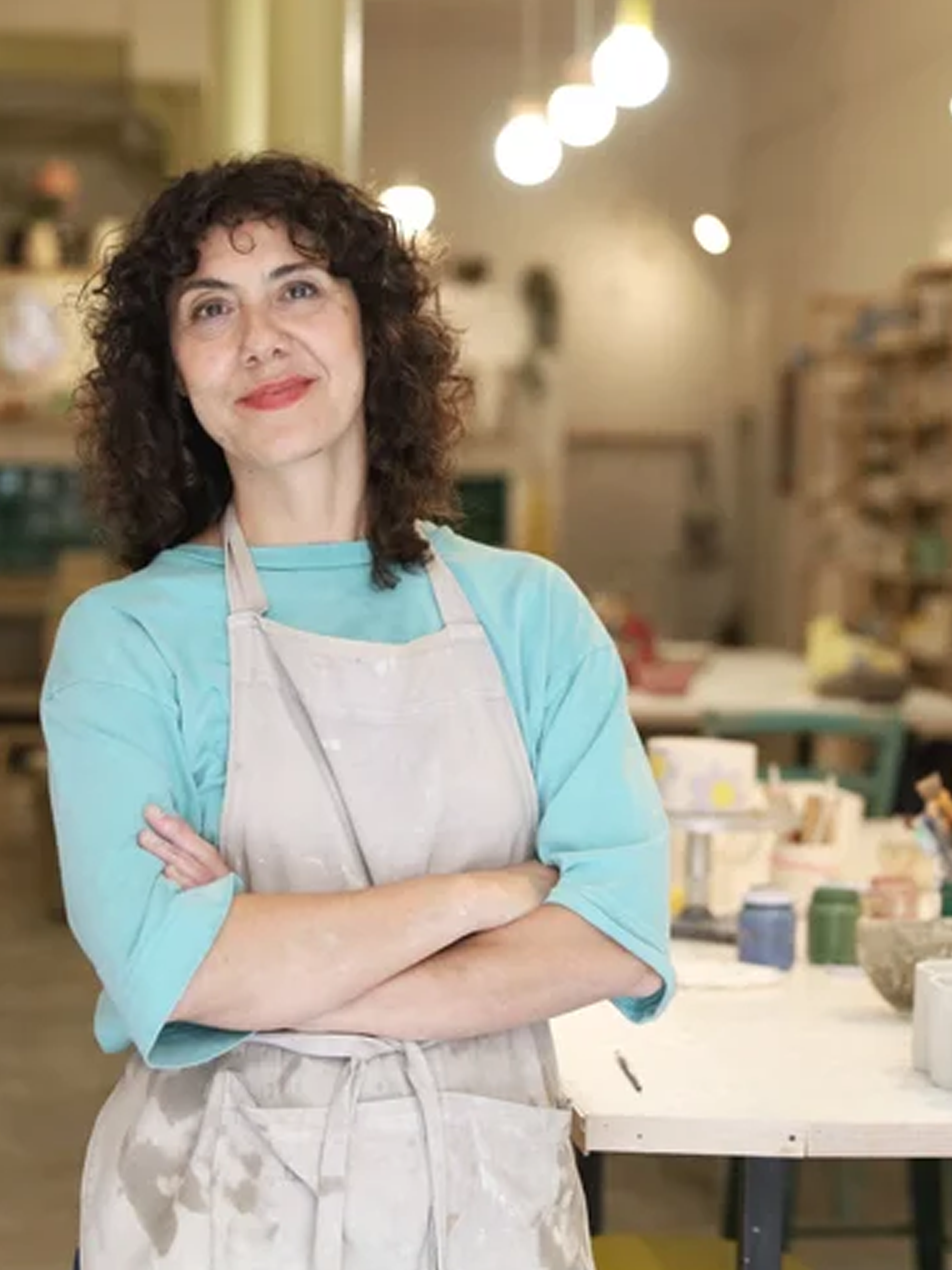
For me, working with clay is a process of connecting with its essence – a space of tranquillity, of personal creation, of building my own world. I see the studio as a space for exploration, where mistakes are also part of the learning process and the creative journey.
At the same time, this approach is reflected in my work with students. Teaching ceramics is not merely about passing on technical knowledge, but about supporting each individual in their own creative process. In the studio, I try to encourage curiosity, experimentation and confidence in one’s own ideas, creating a space where students can explore without fear of making mistakes.
In this way, the studio becomes not only a place for producing pieces, but also a space for learning, exchange and discovery, where daily practice allows students to develop their own personal ways of engaging with ceramics and the creative process.
3. In your opinion, what makes an everyday object like a cup have a special value when it’s handcrafted?
An everyday object such as a cup takes on a special value when it is handcrafted, because it is not merely a functional object, but the result of a human and creative process.
Each piece is unique and bears the marks of manual labour, the passage of time and the decisions made during its creation.
Every mark, every slight irregularity or variation is part of the process and reflects the craftsman’s handiwork. Unlike mass-produced items, no two pieces are exactly alike.
In this sense, the special value of a handcrafted cup lies not only in its usefulness, but in the experience, uniqueness and human dimension it embodies.